Snapshot
Platform: Web + Partner APIs (XML / JSON)
Timeline: 1 quarter (initial rollout)
Role: Revenue & Partner Strategy
Scope: Build and deploy a unified API ecosystem serving multiple brands, comparison sites, and white-label partners to accelerate scalable growth.
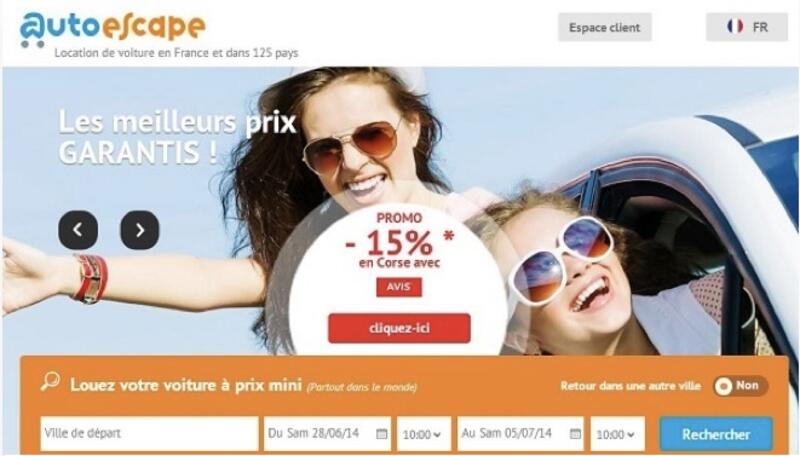
The Context
The European car rental market was becoming increasingly competitive:
Younger, price-sensitive travelers were shifting online.
Comparison-shopping platforms were gaining traction.
Margins were tightening due to pricing pressure.
Marketing budgets lagged behind larger global players.
Brand equity alone was no longer a competitive moat for Autoescape group.
To remain a market leader, growth needed to come from distribution leverage, not incremental UI optimization.
The Problem
Users were no longer starting their booking journey on brand websites.
They were starting on:
Comparison-shopping platforms
Travel aggregators
Price discovery engines
Competing directly on pricing against global rental brands with scale advantage was unsustainable.
The core question became:
How do we meet users where they are, without eroding margin or brand position?
At the same time, the business needed to:
Increase conversion
Protect profitability
Improve LTV/CAC ratio
Demonstrate scalable growth potential
Strategic Hypothesis
We made a bet: growth would not come from doubling down on brand awareness.
It would come from becoming the infrastructure layer behind the ecosystem.
If we:
Centralized our supply architecture
Built a unified API serving all group brands
Expanded aggressively across comparison-shopping platforms
Offered white-label solutions for partners
We could:
Increase revenue volume
Lower customer acquisition cost
Strengthen supplier negotiation leverage
Expand geographic penetration
Position the company as a scalable acquisition target
Success metrics:
Revenue
- Share of revenue via marketing partners
- Overall revenue growth across markets
Conversion
- Booking share through partner channels
- Market dominance in core European geographies
Efficiency
- Improved LTV/CAC ratio
- Centralized supply negotiation power
Prioritization & Architecture Decisions
Instead of optimizing individual brand websites independently, we rebuilt a common API infrastructure across all brands.
This allowed us to:
Serve inventory cohesively across platforms
Avoid internal brand cannibalization
Strategically position one brand as price leader in strong markets
Use the second brand as challenger where appropriate
We expanded distribution across major European comparison sites and aggregators, starting with smaller partners to validate integration economics before onboarding the largest players.
Additionally, we developed a plug-and-play white-label front-end solution for partners seeking deeper integration beyond API feeds.
This shifted the growth model from brand-driven to distribution-driven.
Key Trade-Offs
This required a big mindset shift: we stopped prioritizing brand primacy.
Instead, we optimized for:
Distribution breadth (100+ marketing partners)
Supplier network scale (300+ rental providers across 125+ countries)
Geographic and currency coverage (20+ localized markets)
We became the infrastructure behind the search layer.
Volume strengthened our supplier negotiations.
Stronger rates improved competitiveness.
Competitiveness increased conversion.
The flywheel compounded.
Release Strategy
To validate ecosystem scalability without operational overexposure, we launched with:
Asynchronous booking confirmation flow
Availability and pricing response updated every 24h to 48h
Supplier confirmation up to 72h of booking stage
Kept error handling in the backend before full real-time automation
This reduced integration complexity while proving distribution viability.
Because API partners controlled the UI layer, this approach allowed us to focus on volume and economics first. User experience refinement came later.
What We Drove
Growth & Efficiency
- +40% global revenue growth year-over-year
- 3x operational efficiency gain via centralized supply negotiation
- Stronger supplier leverage through aggregated volume
- Improved LTV/CAC through commission-based acquisition model
The shift from brand-centric growth to ecosystem-driven distribution significantly strengthened the company's strategic profile.
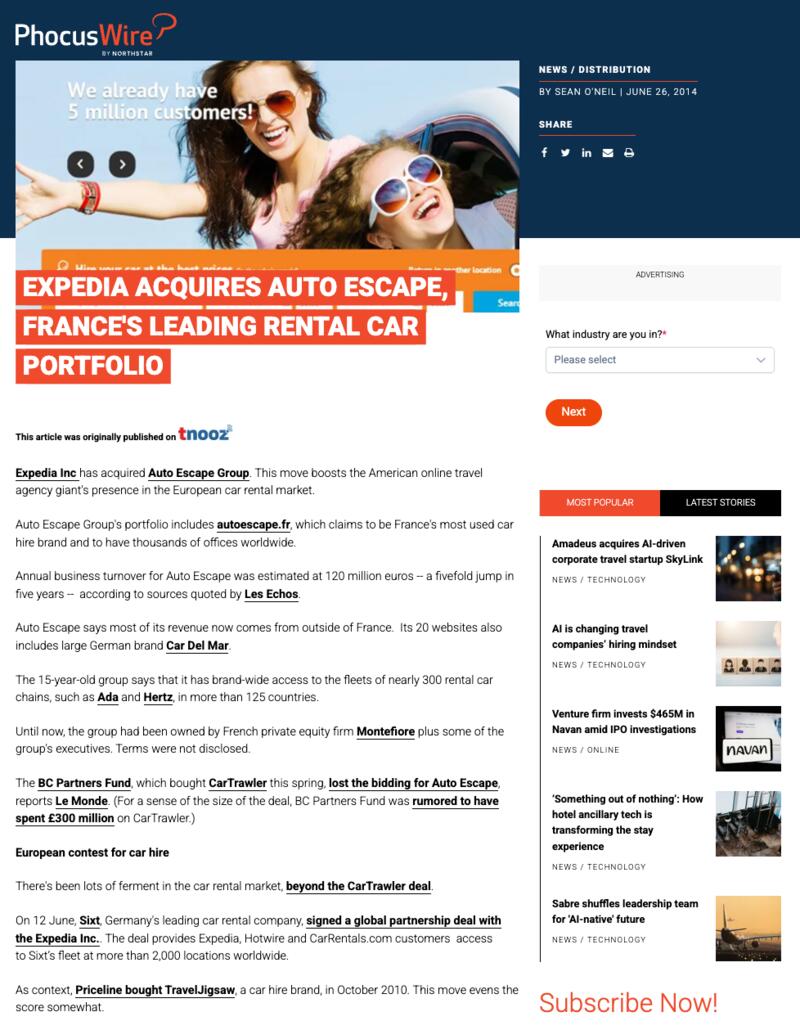
Approximately 18 months later, the company was acquired by Expedia, Inc.
Key acquisition drivers included:
Proprietary supply infrastructure connecting 300+ global rental suppliers
Scalable partner distribution engine
Early dynamic pricing capabilities
Demonstrated revenue growth and operational efficiency
Strategic Takeaways
- Distribution can be a more defensible moat than brand.
- Volume strengthens negotiation power.
- API ecosystems unlock scalable growth without linear marketing spend.
- Market position improves when you control infrastructure, not just experience.
- Liquidity events reward operational scalability, not surface-level growth.
Most importantly:
We built growth that compounded.
If You're Scaling in a Competitive Marketplace
If you are competing against larger players with deeper marketing budgets, brand investment alone will not help you.
Distribution strategy, supply leverage, and ecosystem thinking will.
If you want to identify where your growth flywheel can be built and what to prioritize to increase your strategic value:
Let's define your next move.